



Any equipment needs electricity: from household appliances to complex industrial machines. The "food" for these numerous devices comes to our homes via 230 V networks, and to factories — via 400 V networks.
What to do if the equipment is not designed for such voltage? In such cases, special devices are used — industrial and household power supplies.
What is it?
A power supply is a device that converts electrical energy from alternating or direct current into a stable direct or alternating voltage required to power various electronic devices.
Simply put, power supplies transform "standard" voltage into what we need.
Which devices work from a power supply?
There is much more equipment that needs a power supply than might seem at first glance. Most often, devices requiring 12, 24, and 48 V are encountered.
Here are devices that need 12 V voltage:
- Automotive electronics: radio devices, navigation systems, and chargers.
- Security and video surveillance systems: cameras, motion sensors, and alarms.
- Audio and video equipment.
- LED strips and fixtures.
- Electronic toys, gadgets, and mobile devices.
Devices powered by a 24 V source include:
- Industrial equipment and automated systems: drives, controllers, control panels, and sensors.
- Telecommunications equipment: routers, switches, phones.
- Electronic equipment for cars and trucks: security systems, tachographs, communication equipment.
- Electronic navigation systems and GPS devices for vehicles.
- Medical equipment: patient monitors, research instruments.
- LED lighting: street, decorative, industrial, etc.
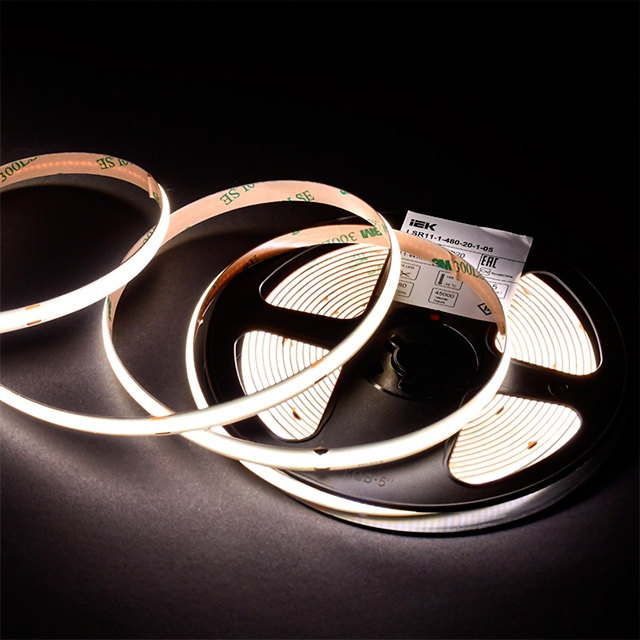
Low-voltage LED strip also needs a power supply — it operates on 12 or 24 V.
Examples of devices that can be powered by 48 V:
- Industrial LED fixtures.
- Electric bicycles and scooters.
- Some laptops and monitors.
- Lifts for the disabled.
- Medical devices: lasers or electrosurgical instruments.
- DC to AC inverters for connecting to the AC grid.
What determines the choice of power supply?
Choosing a suitable power supply depends on several parameters. It is necessary to determine the location and purpose of its installation, as well as the technical characteristics of the powered device and the power supply itself.
What technical specifications are important to pay attention to?
Input voltage — the range of input voltages that the power supply can accept. Typically, this is 220 or 380 V. In real life, the grid voltage to which the power supply is connected may differ from standard values, both higher and lower. Depending on the circuit design used, power supplies may have strict requirements for this value or operate in a fairly wide input voltage range.
Output voltage — the value of the DC or AC voltage generated by the power supply at the output. Usually, this is 12, 24, or 48 V.
Output current — the maximum available current that the power supply can provide. The range here is quite wide and starts from
Power — the total power that the power supply can provide under certain operating conditions.
Efficiency — the ratio between the output and consumed power of the power supply.
Protection functions — mechanisms that prevent damage to connected devices in case of short circuit, overvoltage, and overload. Usually, industrial power supplies are equipped with protection functions, as complex production processes depend on their stable operation.
Connectors — for connecting to the electrical grid and for connecting to the device. Industrial power supplies usually have screw terminal connectors, but specialized proprietary connectors are also found.
Dimensions, form factor, and materials — the dimensions and shape of the power supply for device installation. In industry, power supplies are most often mounted on a DIN rail. This is a type of "standardized" rail manufactured according to DIN 46277, which is installed on a mounting panel. DIN rails have a unified width and height for easy installation, replacement, and connection of electrical devices such as contactors, fuses, relays, and other equipment.
Availability of approvals and certificates — compliance with safety and quality standards, for example, CE, EAC (TR CU), RoHS certificates).
What power supplies are in the ONI assortment?
Our assortment includes two series of industrial power supplies — OPS and OPSE.
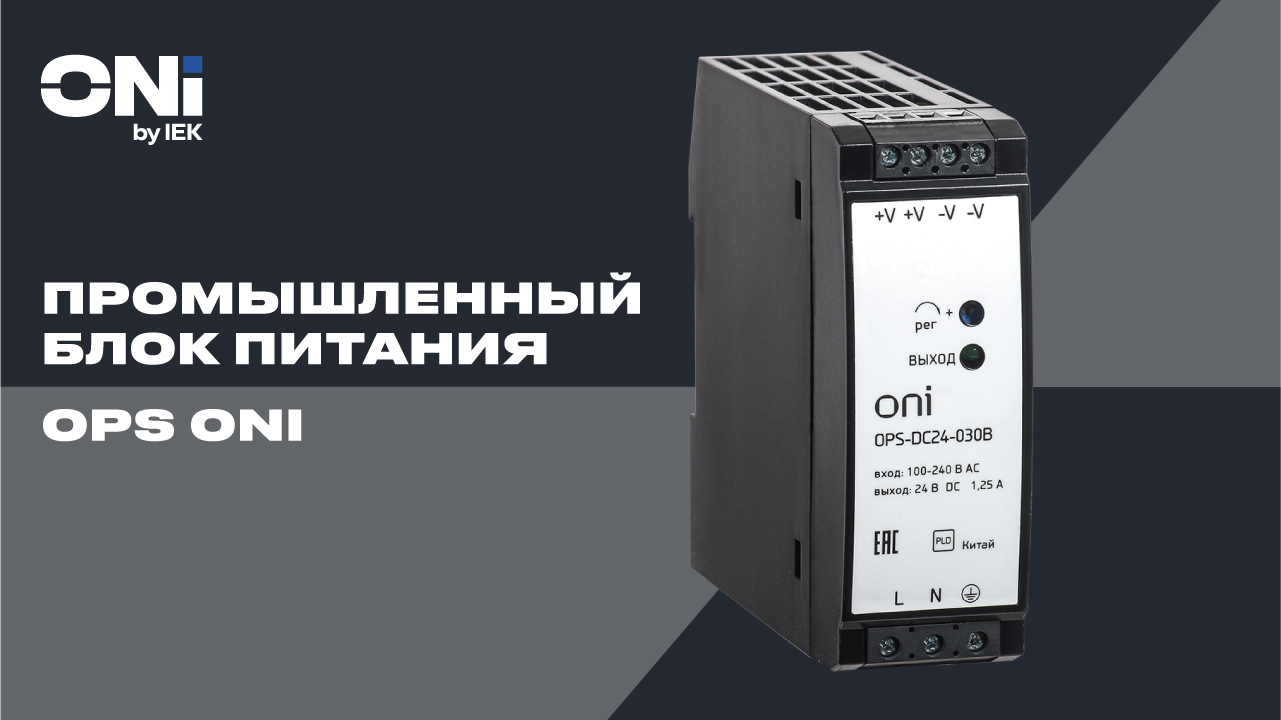
The OPS series is a compact power supply in a plastic housing with DIN rail mounting. This is a basic solution designed for equipment up to 75 W.
OPSE power supplies — an extended solution providing stable power for equipment up to 480 W. The device has built-in overvoltage protection and output current protection.
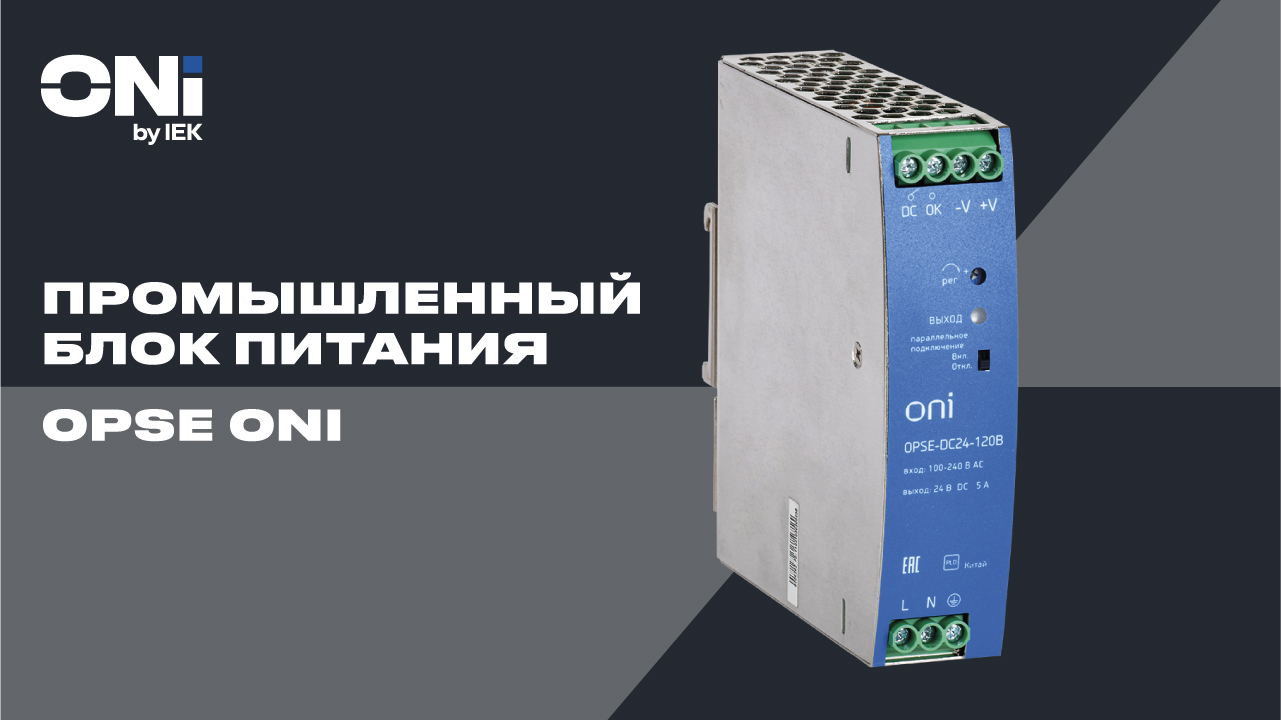
The ONI assortment includes power supplies with output voltages of 12, 24, and 48 V and powers of 30, 60, 120, 240, and 480 W. Choose models with additional options or without them to solve any of your tasks!
Learn more about the assortment on the website oni-system.com or from regional representatives.
We are constantly expanding our assortment — stay tuned for news!