


There are only a few months left until the heating season — it's time to think about the safety of the heating system in your country house. After all, just one power outage and the gas or electric boiler with sensitive automation will stop immediately. And then — icy radiators, burst pipes, and huge repair bills.
To avoid these problems, it is necessary to install an uninterruptible power supply (UPS). But how to choose a suitable model? Let's look at the key aspects of selection.
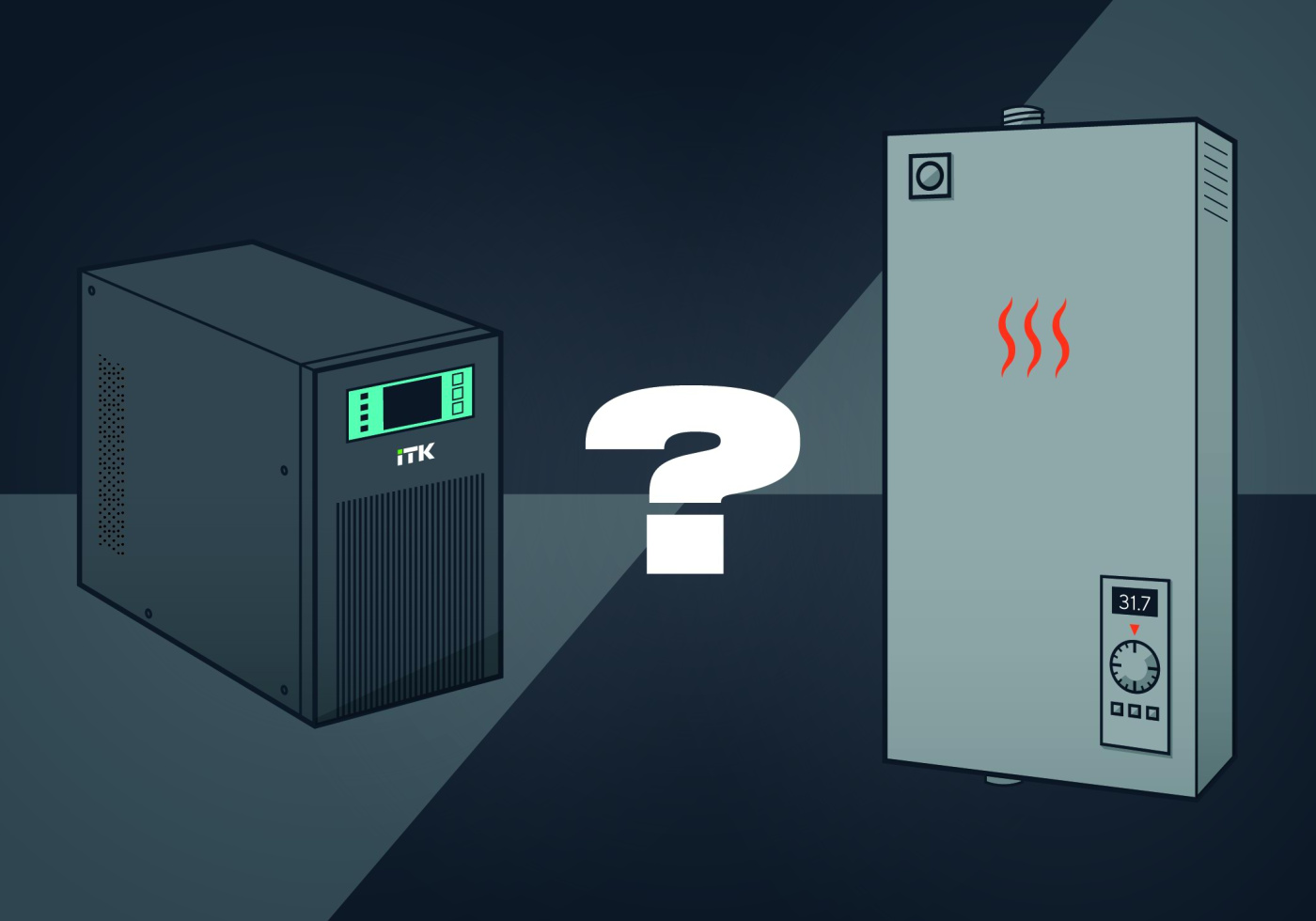
Why does a boiler need a UPS?
The most obvious reason to install a UPS for a boiler is to prevent possible emergency situations in winter. But in other situations, an uninterruptible power supply will also be useful.
- Protection from grid fluctuations
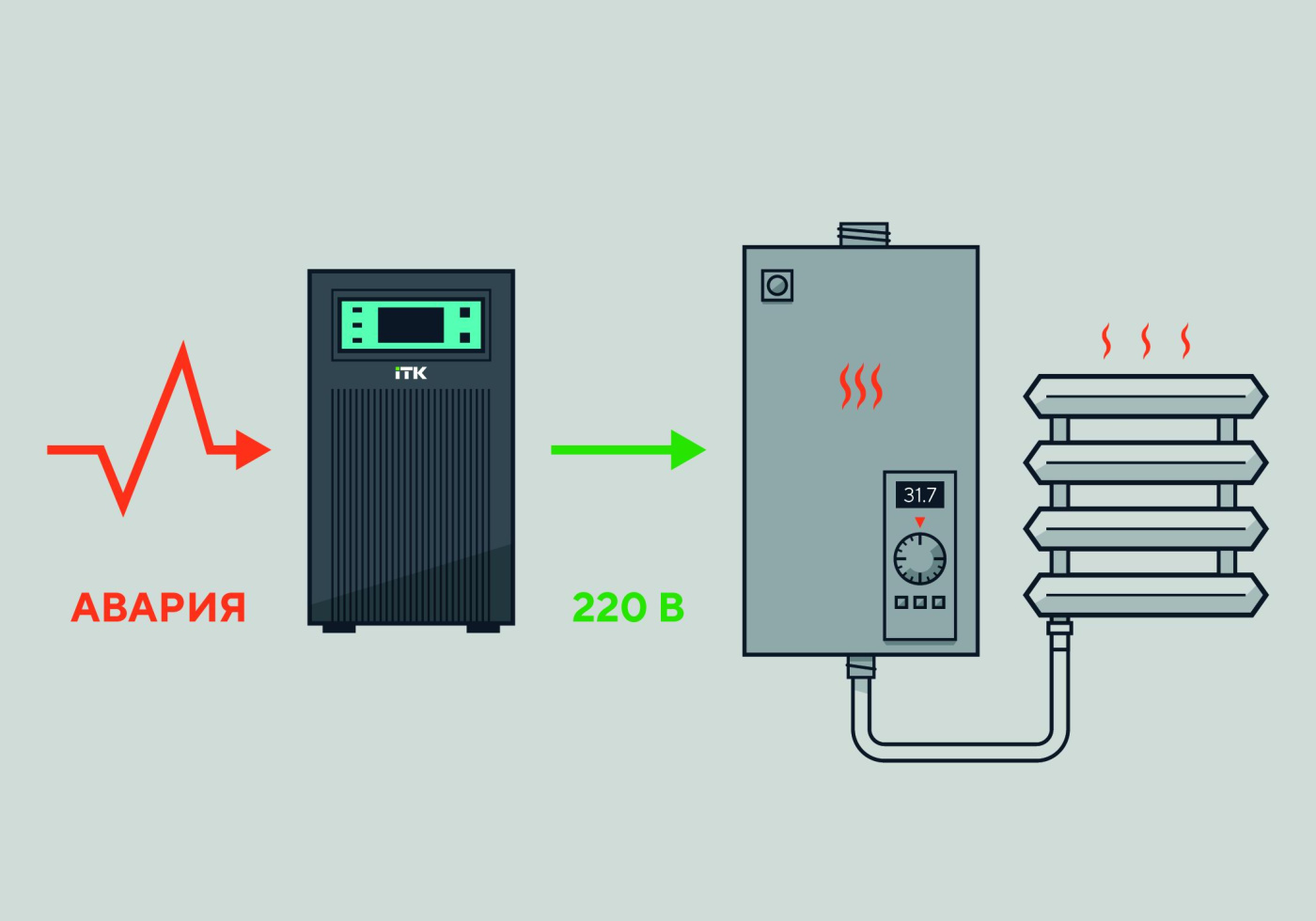
Boilers are sensitive to voltage surges and sudden power outages. A UPS provides backup power, preventing emergency shutdowns.
- Preventing system freeze-up
In winter, stopping the circulation pump can lead to water freezing in pipes and their rupture. A UPS supports system operation until grid power is restored.
- Extending equipment lifespan
Stable voltage reduces the load on the boiler's electronics, decreasing the risk of breakdowns.
Criteria for choosing a UPS for a boiler
What should you pay attention to when choosing a UPS to ensure reliable operation of a modern heating system for a country house? There are several important criteria.
Device power
The UPS power must exceed the total energy consumption of the boiler and pump with a margin of
Calculation formula:
(Boiler power + pump power) × 1.3 (margin for starting currents).
Let's calculate:
If the boiler consumes 150 W and the pump — 100 W, the minimum UPS power:
(150 + 100) × 1.3 = 325 W.
But it's better to take with a margin:
Type of output voltage
This characteristic often confuses inexperienced users. What's better: pure or modified sine wave?
- Pure sine wave — the optimal option for boilers with electronic control and circulation pumps.
- Modified sine wave — cheaper, but can cause motor overheating in pumps and failures in automation operation.
Conclusion: don't skimp and take only pure sine wave!
Battery runtime
Remember how often power outages occur in your area and how long they last.
For short-term outages
Additional functions
Before making a final choice, pay attention to the additional functions provided in various models.
- Protection from overloads and short circuits prevents equipment damage.
- Charge and mode indicators allow monitoring the UPS status.
- The ability to connect external batteries increases battery runtime.
Installation and operation rules
So, you've chosen and purchased an uninterruptible power supply, all that's left is to install it and connect the boiler to it. For the UPS to serve long and reliably, don't forget a few important rules for its operation.
- Place the UPS in a dry, ventilated room, away from heating appliances.
- Regularly check the battery condition (once every
6–12 months). - Do not connect devices exceeding its power to the UPS.
Where to buy a reliable UPS?
The market offers many models, but for heating boilers, ITK ELT, EOR, EOT UPS have proven themselves well — they provide pure sine wave voltage and support connecting external batteries. You can purchase them from official dealers in your region.
A correctly selected UPS will protect the boiler from grid fluctuations, prevent accidents, and extend equipment lifespan. Consider power, output signal type, battery runtime, and system expandability. A competent choice will ensure uninterrupted heat in the house even with power supply problems.